Understand
Make sense of the situation without turning every symptom into evidence that your body is fragile.
About Paul
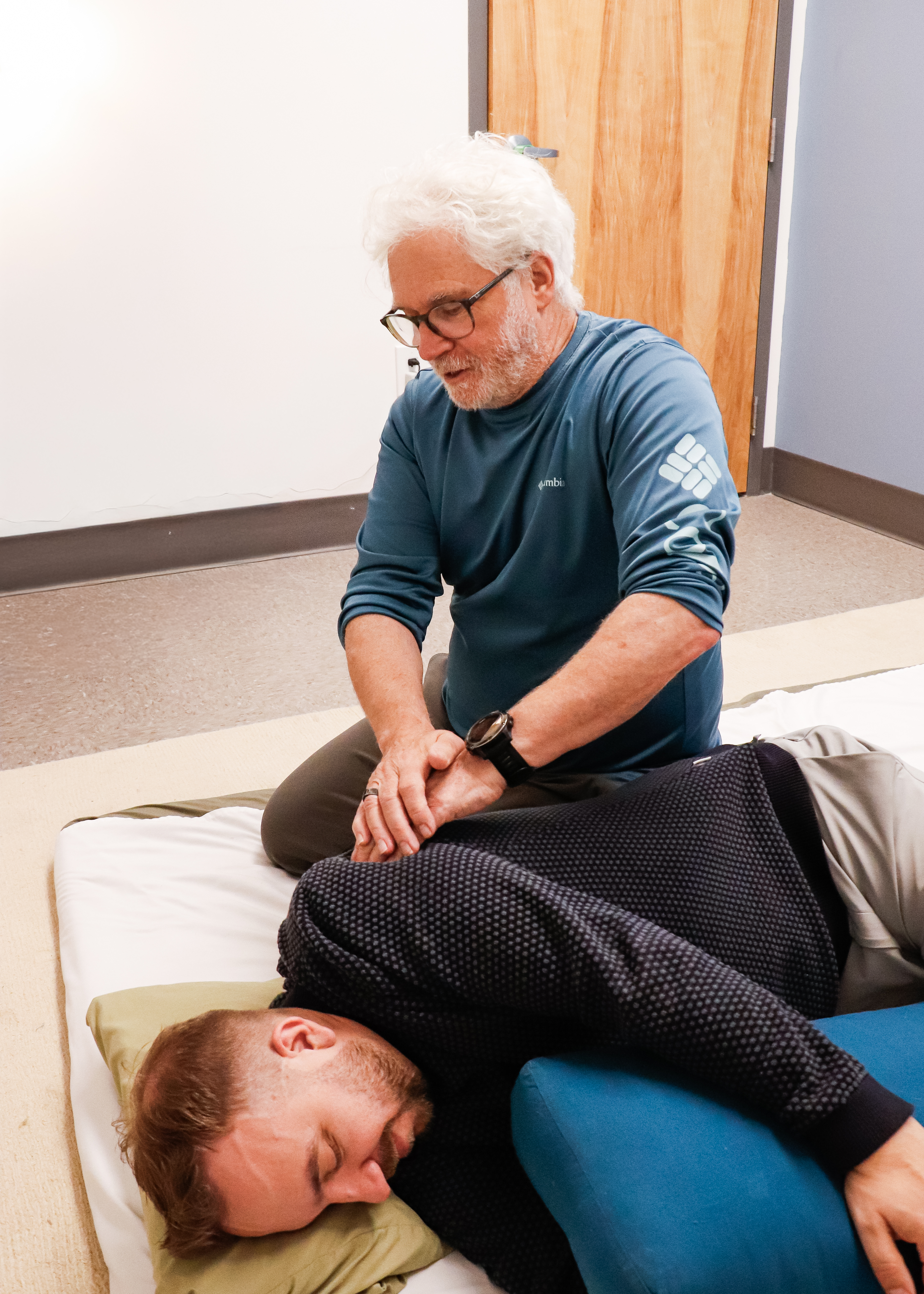
I’m Paul Cramer, a Registered Massage Therapist, educator and lifelong learner based in Edmonton. For more than 25 years, my work has centred on helping people understand physical problems, make better decisions, and return to the activities that matter to them.
Why MovementSpark
Over the years I kept noticing the same problem: people could receive good treatment and still leave unsure about what was happening, what they could safely do, or how to get back to the parts of life they had stopped doing.
MovementSpark grew out of that gap. It is a place for clear explanations, practical planning, hands-on care when it is useful, and progressive ways to build strength, tolerance and confidence.
I am less interested in finding one perfect technique than in helping each person identify what matters, what is getting in the way, and what is most worth doing next.
How I think about care
Understand
Make sense of the situation without turning every symptom into evidence that your body is fragile.
Plan
Choose priorities and useful next steps instead of trying everything at once.
Build
Use treatment, movement, strength and progressive loading to increase what your body can handle.
Experience
Use that capacity in the real world—walking, training, working, sport, travel and everyday life.
Background
My background includes more than 25 years in massage therapy, several years teaching massage, a degree in linguistics, earlier work in information technology, and ongoing study in movement, pain science, rehabilitation, strength and tendinopathy. Whatever field I am working in, I tend to end up teaching it.
Current focus
My clinical interests include tendinopathy, shoulders, persistent musculoskeletal pain, recovery planning, hypermobility, return to activity and helping people build enough strength and capacity to keep doing meaningful things as they age.
The practical part