“Rest it. Ice it. Take a couple of Tylenol until it feels better.”
I think this is some of the most incomplete advice we’ve given people about pain and injury.
Yes, sometimes an injury needs protection and a period of rest. A fracture, a significant tear, or something that needs medical assessment isn’t something you should just exercise your way through.
But for many everyday muscle, joint, and tendon problems, “rest until it stops hurting” leaves out a pretty important part of recovery.
How do we build the ability to do things again?
Ice and pain medication can help with comfort. There’s a place for that. But they don’t, by themselves, rebuild strength, endurance, balance, or confidence.
And feeling better after resting doesn’t necessarily mean you’re ready for the activity that hurt in the first place.
You rest. It settles down. You try your usual activity. It hurts again.
That’s a frustrating cycle.
What CAN I do right now, and how can I build from there?
Maybe you need a shorter walk. A lighter weight. A smaller movement. A different activity for a while. Sometimes the injured area needs protection, but you can still keep the rest of your body active.
The right starting point depends on the injury and how it responds. We’re looking for an amount you can manage and recover from, then gradually building from there.
That isn’t permission to push through everything. It’s a reason to have a plan beyond waiting.
Why stop at getting back to where you were?
What I want for the people I work with goes beyond having less pain.
If walking, gardening, running, or lifting was more than your body could manage at that moment, simply resting until the pain settles may leave you unprepared for the next time.
And chances are, you still want to do those things. They’re part of your life.
So why stop at getting back to where you were? Let’s work toward making you more capable than you were before.
That might mean building more strength, more endurance, or gradually getting comfortable with the activity again. It might also mean adjusting how much you do at once and giving yourself enough recovery between efforts.
An injury doesn’t automatically mean you were weak or did something wrong. Sometimes there’s a sudden increase in activity, an awkward moment, or several things coming together.
We can’t prevent every injury. But we can use recovery as an opportunity to build your capacity for the life you want to keep living.
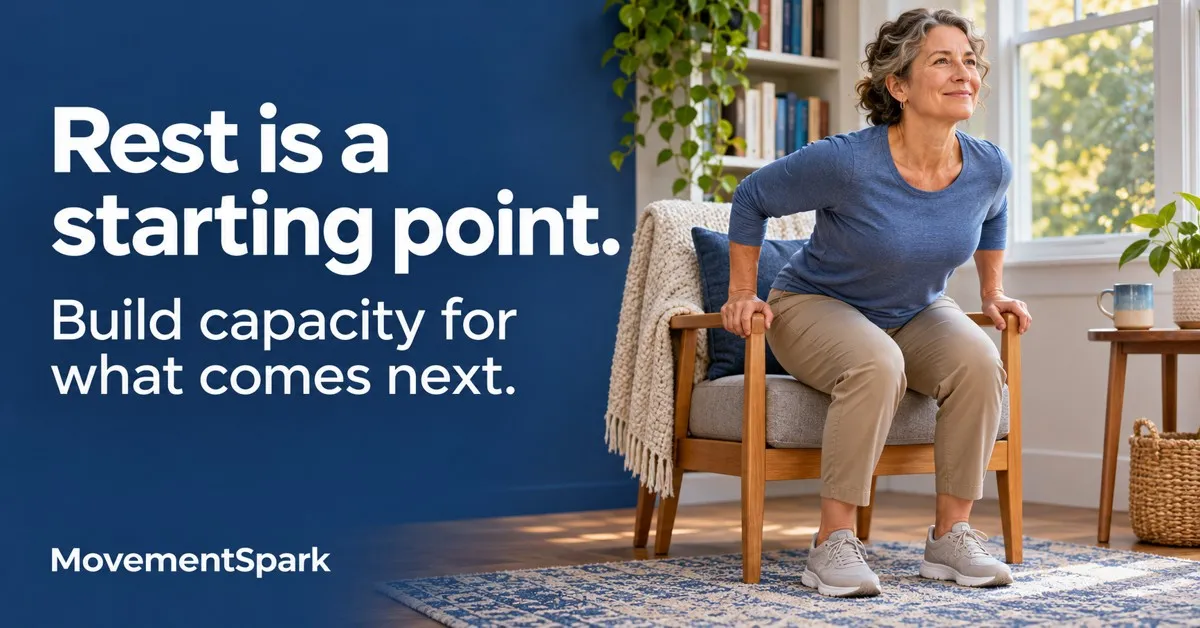
Rest can help things settle. A progressive plan helps prepare you for what comes next.
Paul Cramer, RMT · MovementSpark
Put the idea into practice
For a practical next step, read How to Get Active Again or Give Your Body a Reason to Adapt.
If you need help finding your starting point, work with Paul on a practical recovery plan.
A note on the evidence
The right balance of protection, movement and loading depends on the condition and injury severity. For example, ankle-sprain guidelines recommend progressive weight bearing and structured rehabilitation, with a short period of immobilization for some more severe injuries. A randomized trial also found that early therapeutic exercise improved function during the first weeks after mild or moderate ankle sprains. These findings support an active approach for those injuries; they are not a single prescription for every painful condition.
- Ankle sprain clinical practice guideline, JOSPT (2021)
- Effect of accelerated rehabilitation on function after ankle sprain: randomized controlled trial, BMJ (2010)
This article provides general education, not an individual diagnosis or treatment prescription. Significant trauma, inability to use or bear weight on a limb, or new or worsening symptoms warrant assessment. Use medication only as directed by its label or your healthcare professional.