
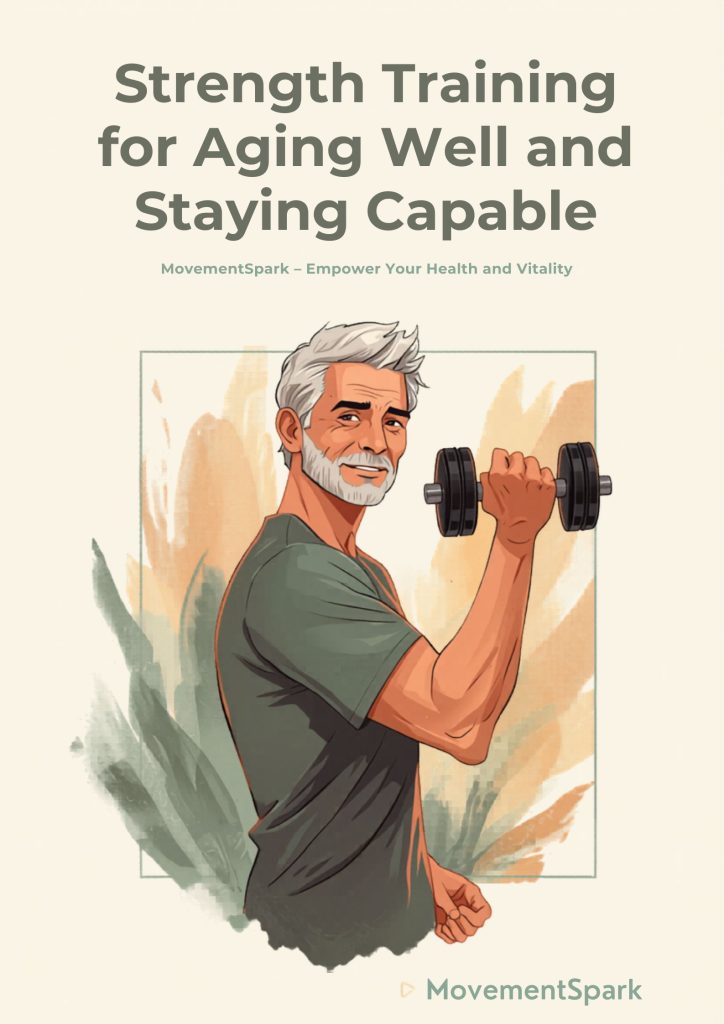
Most people know that protein matters.
We hear it all the time: Eat more protein. Get enough protein. Protect your muscle as you age.
And that advice is not wrong.
Protein is important. Your body needs it to repair, rebuild, and maintain muscle tissue. Especially as we get older, getting enough high-quality protein becomes more important.
But there’s an important piece that often gets missed.
Protein gives your body the building blocks. Strength training gives your body the reason to use them.
That’s the part I want more people to understand.
Because when it comes to aging well, staying active, recovering from injury, or simply feeling stronger in your body, nutrition and movement are not separate conversations. They work together.
Your Body Responds to Demand
Your body is always listening.
Not in a mystical way. In a very practical, biological way.
If your muscles are regularly asked to lift, push, pull, carry, climb stairs, get up from the floor, or support you through daily life, your body gets the message:
“We need to stay strong for this.”
But if your body is rarely challenged, it receives a different message:
“We don’t need as much strength here.”
And over time, that matters.
Muscle is not just about looking fit. Muscle is one of the key tissues that helps us stay capable. It supports our joints, helps regulate metabolism, protects independence, improves balance, and gives us more confidence in daily life.
Strength is not just for athletes.
Strength is for carrying groceries. Strength is for getting up from the ground. Strength is for hiking with your family. Strength is for recovering better after injury. Strength is for feeling less fragile as you age.
Why Protein Alone Isn’t Enough
There’s a concept called anabolic resistance, which basically means that as we age, our muscles do not respond to protein as easily as they once did.
In younger bodies, protein can create a stronger muscle-building signal. But in older adults, that signal can become quieter. One study mentioned in the original article found that older adults who increased protein intake through whey supplementation improved some blood markers, but did not see meaningful improvements in muscle mass, leg strength, or physical performance without the right physical stimulus.
That does not mean protein failed.
It means protein was only part of the equation.
Think of it this way:
Protein is the lumber. Strength training is the blueprint and the construction crew.
You can deliver all the lumber you want to the job site, but if no one is building, the house does not go up.
Your muscles need both: the raw materials and the signal to adapt.
Strength Training Is a Message to Your Body
When you lift something challenging — in a safe, progressive, appropriate way — your muscles experience tension.
That tension is not a bad thing. It is information.
It tells your body:
“This matters. Keep this tissue strong. Build more capacity here.”
This is one of the most empowering things about exercise. You are not just burning calories. You are not just checking off a workout.
You are having a conversation with your body.
You are reminding it what you want to be able to do.
You are saying:
“I want to keep moving.” “I want to stay capable.” “I want to trust my legs.” “I want to feel strong enough for my life.” “I want to age with more confidence.”
That is a very different way to think about working out.
You Don’t Need to Become a Bodybuilder
This is where people sometimes get overwhelmed.
When I say “strength training,” I do not mean you need to suddenly become a powerlifter, join an intense gym, or train like an athlete.
You can start simply.
A strength program might include:
- Sit-to-stands from a chair
- Calf raises
- Step-ups
- Wall push-ups
- Rows with a band
- Carrying weights
- Squats or deadlifts with appropriate load
- Slow, controlled resistance exercises
The key is not perfection.
The key is progression.
Your body needs a challenge that is appropriate for where you are now — and then, over time, that challenge needs to gradually grow.
That is how capacity is built.
The Real Benefit: Capacity
At MovementSpark, I often come back to this word:
Capacity.
Capacity is your body’s ability to meet the demands of your life.
If your life asks you to climb stairs, your legs need enough capacity for stairs. If your life asks you to garden, your hips, back, and knees need capacity for bending and lifting. If your life asks you to travel, walk, play with kids, work, exercise, or recover from injury, your body needs enough capacity to handle those things.
Pain and injury often show up when the demands of life exceed the capacity of the body.
Strength training helps close that gap.
It gives your body a wider buffer.
More strength. More confidence. More resilience. More room to live.
A Simple Way to Think About It
Nutrition helps supply the body.
Strength training helps direct the body.
Protein says:
“Here are the materials.”
Strength training says:
“Here is where we need to build.”
Together, they become a powerful combination.
This is especially important as we age. We do not want to wait until we feel weak, stiff, sore, or limited before we start building strength.
We want to build before we need it.
Not out of fear.
Out of care.
The Takeaway
Strength training is not punishment. It is not just about weight loss. It is not only for young people, athletes, or gym people.
Strength training is one of the most practical ways to invest in your future body.
It helps you stay capable. It helps you recover. It helps you age with more confidence. It helps your nutrition work better. It helps you participate more fully in your own life.
You do not need to start big.
But you do need to start.
Because your body is always adapting to the life you are living.
The question is:
Are you giving it a reason to stay strong?


